
Silicone Stretch Lids Review: Do They Actually Live Up to the Eco Hype?
Silicone stretch lids promise to replace the plastic wrap drawer entirely — one flexible lid that seals any bowl, pot, or container in your kitchen. The seal is real, the versatility is genuine, and they do replace a meaningful amount of single-use plastic. But not all silicone is equal, the eco story is more complicated than the marketing suggests, and there are a few real-world failure modes that most reviews quietly skip past. This review covers what works, what doesn’t, what to look for in a quality set, and whether they belong in a genuinely low-waste kitchen.
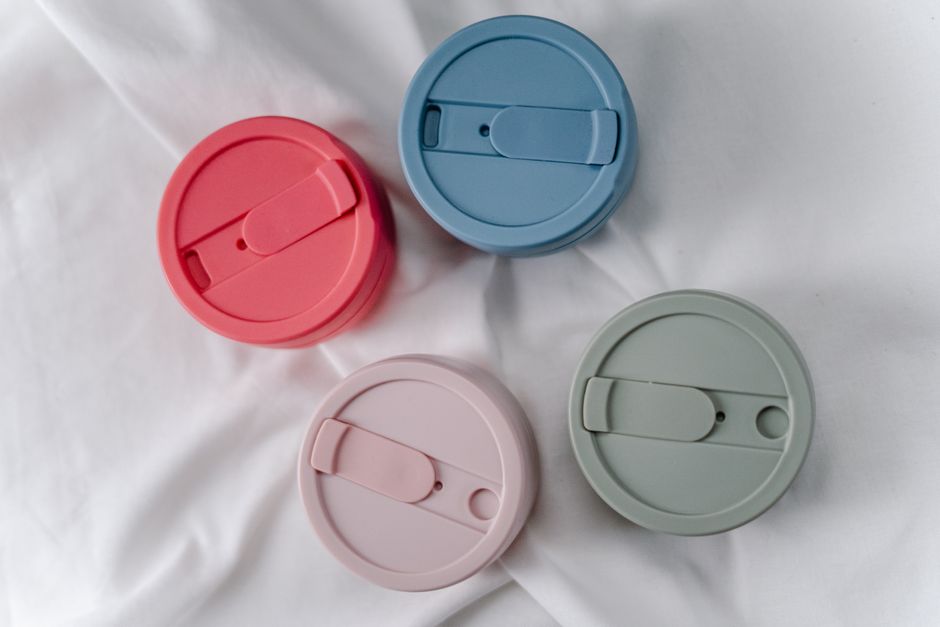
What Are Silicone Stretch Lids and How Do They Work?
One lid, any container
The idea is straightforward. Instead of matching lids to containers — a system that breaks down the moment one lid goes missing — silicone stretch lids are universal. A single lid stretches to fit a range of container sizes. Buy a set of six or eight lids covering different diameter ranges, and you have a flexible system that adapts to whatever bowl, pot, glass, or can you’re working with.
They’re designed to replace plastic wrap, aluminum foil, and the constellation of mismatched plastic container lids that accumulate in most kitchen drawers.
How the stretch and seal mechanism works
The mechanism relies on silicone’s natural elasticity combined with a ribbed or ridged outer edge. When you pull the lid over a container rim, the material stretches and creates tension — like a wide rubber band — and that tension holds the seal. The ribs along the edge grip the outside of the rim and prevent the lid from popping back off.
The standard application technique: place the lid centered on the container, then pull the tabs or outer edge down and outward while pressing the center down. Think of it like stretching a swim cap over your head — work from the center outward, using consistent tension rather than forcing one side first. Most lids have one or two tabs to help. Pulling them outward and down locks the ridged edge against the rim.
Removal is the reverse: grab a tab, pull upward, and the seal releases immediately. No suction, no wrestling.
Size ranges — what each size actually fits
Most sets offer six sizes ranging from extra-small to extra-large, covering roughly 2 inches to 9 inches in diameter.
| Size Label | Diameter Range | Common Uses |
|---|---|---|
| XS | 2–2.5 inches | Small glasses, opened cans, avocado halves |
| S | 2.5–3.5 inches | Mugs, small bowls, lemon halves |
| M | 3.5–5 inches | Cereal bowls, soup bowls, small pots |
| L | 5–6.5 inches | Standard dinner bowls, medium pots, Tupperware |
| XL | 6.5–8 inches | Large mixing bowls, salad bowls, pots |
| XXL | 8–9+ inches | Stock pots, large casserole dishes, wide pans |
These are diameter ranges — the distance across the opening, not the circumference. Measure across the top of your bowl before buying, not around it. Most listings only show the diameter range, and readers who skip this step end up with sets that don’t fit their largest pots or their smallest glasses.
One more thing: silicone stretch lids grip the outside of a rim. If a container has an unusually thick rim, a deeply beveled edge, or flared sides, the lid may not seal properly even if the diameter is within range.
Are Silicone Stretch Lids Safe?
This is where most reviews stop at “BPA-free” and consider the question answered. That’s not enough.
What “BPA-free” and “food-grade silicone” actually mean
BPA (bisphenol A) is a chemical used in polycarbonate plastics and epoxy resins, linked to hormonal disruption and developmental problems in children. Seeing “BPA-free” on a silicone lid is a bit like seeing “dairy-free” on a bottle of olive oil — technically accurate, meaningfully uninformative, because silicone isn’t made with BPA in the first place.
“Food-grade silicone” is the more important claim. True food-grade silicone is a synthetic polymer made from silicon, oxygen, carbon, and hydrogen. In its pure form, it’s chemically stable, doesn’t react with food or beverages, and doesn’t leach at normal food-storage or cooking temperatures. The problem is that manufacturers can add fillers to reduce production costs, and that’s where things get complicated.
The stretch test: how to spot low-quality silicone
This is the most actionable safety check you can do, and it costs nothing. Grab a lid and stretch it firmly between both hands — pull it taut, the way you’d stretch a rubber band before snapping it.
High-quality food-grade silicone stays completely clear and transparent as you stretch it. Low-quality silicone with added fillers — calcium carbonate, PVC, and other extenders are common — turns white or cloudy. You’re seeing the filler material separating from the silicone matrix under tension. That separation also happens with heat, time, and repeated exposure to food, which means the filler can migrate into what you’re eating.
Do this test before using any new set. If you see whitening or cloudiness, return the product. This isn’t an edge case — the market for inexpensive silicone products, particularly on mass marketplace platforms, includes a significant number of lids that fail this test.
Platinum-grade vs. standard food-grade silicone
Standard food-grade silicone uses a peroxide-curing process that can leave behind residues affecting flavor — you may notice a rubbery or slightly chemical smell, especially when first heated. Residual chemicals in silicone, such as siloxane oligomers, are non-intentionally added substances that may migrate into food during processing, but they’re generally considered safe at low concentrations.
Platinum-grade silicone uses a platinum catalyst instead of peroxide. The catalyst leaves no residue after curing, producing silicone that is purer, odorless, tasteless, and more resistant to temperature extremes. It’s the standard used in medical devices and high-end food equipment.
For stretch lids, platinum-grade means no rubbery smell near warm food, more consistent elasticity over time, and better performance at both freezer and oven temperatures. The trade-off is cost. Sets marketed explicitly as platinum-grade — brands like Stasher and some lines from Kitch and Sugarflair — typically start around $25–$35 for a full set, compared to $10–$15 for standard food-grade sets from generic brands.
For everyday food storage, standard food-grade silicone from a reputable brand that passes the stretch test is likely adequate. If you’re regularly using the lids in a warm microwave, in an oven, or with oily foods over long periods, platinum-grade is the more defensible choice.
Certifications worth knowing
“FDA food-safe” or “FDA compliant” means the material meets FDA regulations for food-contact substances under 21 CFR 177.2600. That’s a meaningful baseline, but it doesn’t mean the FDA tested your specific product, and it doesn’t cover every additive or filler that might be present.
The most useful third-party certification for silicone stretch lids sold to US buyers is LFGB — the German Food and Feed Code standard. LFGB testing is generally more stringent than FDA food-contact compliance because it includes migration testing at elevated temperatures and for a wider range of substances. A product certified to LFGB has been tested by an independent lab.
Other certifications to recognize:
- EU 10/2011 — EU regulation for silicone food contact materials
- REACH compliance — EU chemical safety regulation
- California Prop 65 compliance — relevant for US buyers concerned about trace chemical exposure
If a brand lists none of these and simply says “BPA-free” and “food-grade,” that’s not enough. Ask for testing documentation, or choose a brand that publishes it proactively.
Performance — What We Actually Tested
Seal strength: the upside-down water test
Fill a bowl about two-thirds full of water. Apply a stretch lid using proper technique — center it, then pull the edge down and outward. Flip it upside down over the sink.
A properly sealed lid holds completely. No drips, no seepage. This confirms something useful: if a lid seals well enough to hold liquid upside down, it will absolutely keep air out during refrigerator storage. Soups, stocks, marinated items, cut fruit in their juices — all hold up well.
Where the seal becomes unreliable is on containers with unusual rim geometry: deep grooves, very wide flanges, or non-uniform surfaces. The lid needs a consistent lip to grip.
Round, square, and rectangular containers
Silicone stretch lids work best on round containers. The tension distributes evenly around the circumference and the seal is consistently strong.
On square containers, performance depends on the lid size relative to container dimensions. If the diagonal measurement falls within the lid’s diameter range, the lid will stretch over it — but the corners require more stretching than the flat sides. For most storage purposes this is fine. For transporting liquid, less so.
Rectangular containers are the hardest case. Elongated dishes — a long loaf pan, a rectangular baking dish — are genuinely difficult to seal reliably. For these shapes, a purpose-made silicone suction lid or a fitted container lid makes more sense.
Working with overfilled containers
Stretch lids handle mounded food better than plastic wrap in one specific way: they seal at the rim, not across the top of the food, so they don’t need to contact the food surface. That said, if food or liquid is sitting on the rim itself, the lid can’t grip a clean surface. Wipe the rim before applying a lid, especially with soups or sauces that tend to drip.
Refrigerator and freezer performance
In the refrigerator, stretch lids perform well for most tasks. Cut vegetables, leftover rice, soups, marinating proteins, halved citrus — all hold up well over 2–4 days with a properly sealed lid.
In the freezer, silicone maintains flexibility at freezing temperatures, which is an advantage over plastic lids that can become brittle. But stretch lids are not airtight enough for long-term freezer storage. Freezer burn is primarily a moisture problem, and a stretch lid doesn’t create the fully airtight seal that vacuum-sealed bags or snap-lock containers do. Use them for short-term freezer storage — a week or two for something you’ll use soon — not for long-term storage of meat or fish.
Microwave use
Most silicone stretch lids are rated microwave-safe and work well as a splatter cover. They allow steam to escape slightly around the edges and stay stable during normal microwave heating.
Temperature rating matters. Many sets are rated to 220°F (105°C) — fine for microwave use but not for oven use. Higher-end sets are rated to 450°F or 550°F. If you want to use stretch lids in a conventional or toaster oven, verify the specific temperature rating. A lid rated to 220°F used at a typical roasting temperature of 375°F (190°C) can degrade.
The wet surface problem
This is the failure mode that most reviews skip, and it’s a real one.
If the rim of your container is wet — from condensation, from rinsing, from a dripping lid — the stretch lid will not seal reliably. Silicone needs friction against the rim to hold. Water acts as a lubricant that prevents that friction from establishing. The lid feels like it’s on, and then slides off, or slowly works itself loose in the refrigerator.
This happens most often with containers pulled directly from the dishwasher, bowls rinsed and immediately covered, or containers that have developed condensation on the rim.
The fix is simple but requires a habit: dry the rim before applying the lid. A quick wipe with a dish towel is enough. This one step eliminates most seal failures.
Cleaning and Long-Term Durability
Dishwasher vs. hand-washing
Most silicone stretch lids are dishwasher-safe, and top-rack placement works well for routine cleaning. One thing to watch: high-heat dry cycles. The heating element in the drying phase can reach temperatures that accelerate silicone aging, particularly for standard food-grade lids. Using air-dry mode or pulling the lids out after the wash cycle extends their life.
Hand-washing is more effective for lids used with oily or heavily seasoned foods. Silicone holds oil, and a standard dishwasher cycle may not fully remove it from the ridged edges. A few seconds of scrubbing with dish soap and warm water clears it cleanly.
Cleaning the ridges
The ridged edge is the hardest area to clean and the place where food, oil, and seasoning accumulate most. Left there, they transfer to other containers and eventually develop odors.
What works:
1. Apply dish soap directly to the ridged area before wetting
2. Work it into the grooves with a soft-bristled bottle brush or toothbrush
3. Rinse under running water while flexing the lid — the movement opens the ridges and flushes debris out
For baked-on residue or turmeric staining, soak in hot soapy water for 10–15 minutes before scrubbing.
Staining, warping, and degradation
Staining is the most common complaint, and it’s legitimate. Tomato sauce, curries, beet, turmeric — all leave visible discoloration on light-colored silicone. It doesn’t affect function or safety, but it’s cosmetically annoying. Clear or translucent lids stain less visibly than white or cream-colored ones, which is worth factoring in at purchase.
Warping is rare with quality silicone. Unlike plastic, silicone doesn’t take a permanent set from heat exposure within its rated temperature range. If a lid warps, it was almost certainly used above its rated temperature.
Degradation in normal kitchen use — drawer storage, standard dish soap, temperatures within rating — is minimal over years of use.
Realistic lifespan
In actual kitchen conditions — regular washing, food contact, temperature cycling — a quality set should last 5–10 years before you notice meaningful elasticity loss or tearing. Cheap lids that fail the stretch test or lack clear certifications may show these signs within 1–2 years.
Signs a lid needs replacing:
- No longer stretches to fit containers it previously fit
- Visible cracks or tears, particularly around the ridged edge
- Persistent odor after washing
- Silicone feels sticky or tacky on the surface
The durability gap between a $10 generic set and a $30 certified set is real, and it has a direct impact on cost-per-use over time.
Are Silicone Stretch Lids Actually Eco-Friendly?
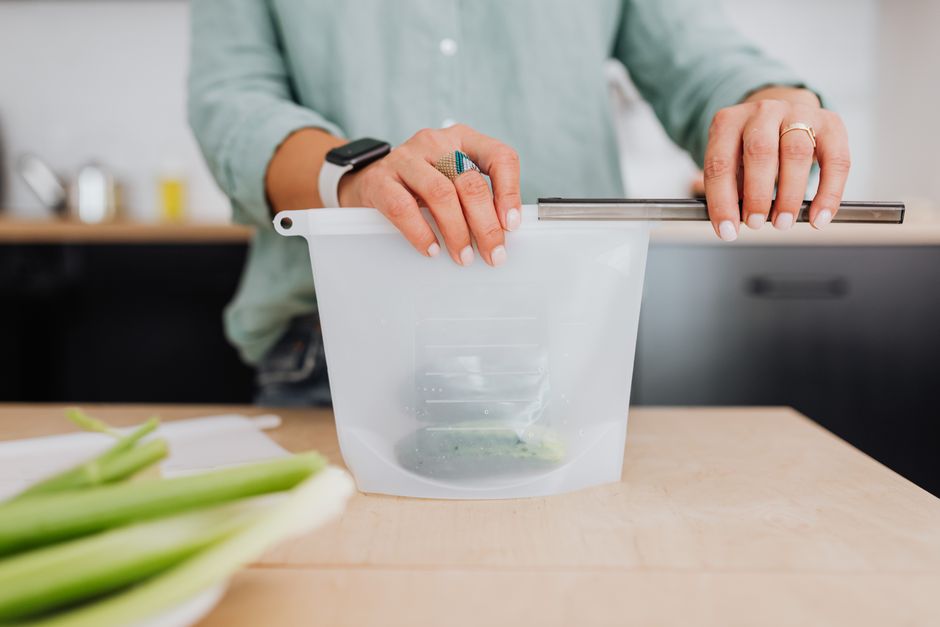
This is where other reviews go vague. Here’s the honest answer.
How silicone is made — and why it’s not perfectly green
Silicone is derived from silica — refined quartz sand — which is abundant. The production process, though, involves energy-intensive high-temperature chemical processing and carbon-based reagents. Manufacturing silicone is not low-impact.
Silicone also doesn’t biodegrade. It doesn’t break down in soil or water. At end of life, it persists.
So why is it still a better choice than plastic for food storage? Because the environmental math is about use cycles, not just material origin. A silicone lid that replaces plastic wrap for five years offsets the production and disposal of hundreds of individual pieces of single-use plastic. The manufacturing cost becomes smaller and smaller relative to the avoided plastic waste with every additional use.
The plastic wrap comparison
The average American household uses approximately 24 rolls of plastic wrap per year — though some estimates suggest usage varies widely. Each standard roll contains 100–200 feet of plastic film, most of which ends up in landfill or in recycling streams where it causes processing problems.
A set of six silicone stretch lids, used consistently, can replace the majority of that usage. Conservative estimate: if a household replaces 18 of those 24 rolls annually, over five years that’s roughly 90 rolls of plastic wrap avoided — somewhere between 9,000 and 18,000 feet of single-use plastic film that doesn’t get made, used, and thrown away. The math only works if the lids actually get used. A set that sits in a drawer while you keep reaching for plastic wrap creates no benefit.
Where silicone wins and where it falls short
Where silicone wins over plastic:
- No microplastic shedding
- Chemically stable — doesn’t leach plasticizers, phthalates, or BPA under normal use
- Durable enough for hundreds or thousands of uses before disposal
- Doesn’t degrade into toxic compounds in landfill
Where it falls short:
- Energy-intensive to produce
- Not biodegradable
- Not recyclable through most curbside programs
- Persists in landfill for an extremely long time
- Cheap silicone with fillers may leach those fillers — the eco argument assumes quality materials
The comparison to single-use plastic is favorable. The comparison to truly zero-waste alternatives — glass containers with fitted lids, beeswax wraps, reusable fabric bowl covers — is more nuanced. Silicone stretch lids are a practical middle ground: genuinely more sustainable than plastic wrap in daily use, not the endpoint of a zero-waste kitchen.
End-of-life disposal — can silicone stretch lids be recycled?
Most reviews don’t answer this, so here it is: standard curbside recycling programs in the United States do not accept silicone. It doesn’t fit into the numbered resin coding system used for plastic recycling, and most municipal facilities don’t have the equipment to process it.
Your options:
Specialty recyclers: TerraCycle has programs that accept silicone products, though offerings change. Check their website for current availability.
Manufacturer take-back programs: A small number of brands are beginning to offer take-back programs for worn silicone products. Not standard across the industry, but worth asking your brand about.
Repurposing before disposal: Worn stretch lids work as jar openers, light pot holders, or non-slip mats under cutting boards. Extending life before disposal beats recycling.
Landfill as last resort: Silicone in landfill doesn’t leach toxic chemicals the way plastic can and doesn’t generate microplastic contamination. It persists, but that persistence is chemically inert.
The honest summary: silicone stretch lids are not a zero-waste solution at end of life. They’re a low-toxicity, long-lifespan alternative to a genuinely harmful single-use product. Use them for 5–10 years, pursue specialty recycling when they’re done, and the environmental case is solid. Use them for six months and throw them away, and it’s not.
Who Should (and Shouldn’t) Buy Silicone Stretch Lids
Where they genuinely work
Covering bowls and pots instead of plastic wrap. This is the core use case. Cut produce, leftover soups, marinating meats, half-eaten canned goods — all covered reliably.
Universal lid replacement. Lost the lid to a specific container? A stretch lid of the right size works. Genuinely useful in households with mismatched container collections, which is most of them.
Opened cans. A small stretch lid over an open can of coconut milk, tomatoes, or pet food beats aluminum foil crimped over the top every single time.
Microwave coverage. Flexible, easy to apply, heat-stable, reusable. Good splatter guard.
Travel and lunchboxes. More secure than plastic wrap for transport, no sticky residue.
Covering toiletries in luggage. Stretch a small or medium lid over an open shampoo bottle or lotion pump. Not their intended use, but it works.
Real limitations
Not airtight. For long-term storage, delicate produce, or freezer storage beyond a few weeks, a snap-lock or screw-lid container is more effective.
Wet surface failure. Any moisture on the container rim compromises the seal. Manageable with the habit of drying the rim first, but worth knowing.
Shape limitations. Rectangular and oddly shaped containers are harder to seal reliably. Round containers with standard rims are the ideal case.
Not ideal for tall, narrow containers. A stretch lid on a tall, narrow container creates leverage — if it tips, the lid releases more easily than it would on a wider, lower bowl.
Size selection requires attention. The most common complaint. Too small and it won’t stretch over the rim; too large and it won’t create enough tension to hold.
Not recyclable through curbside programs. A real limitation for zero-waste households where end-of-life disposal matters.
Are they right for a zero-waste kitchen?
Yes — with clear eyes about what they are. They’re a practical, durable replacement for single-use plastic wrap and foil, not the endpoint of a zero-waste kitchen. Combined with glass storage containers, beeswax wraps, and silicone bags for produce, stretch lids fill a specific niche — covering open containers — well without generating ongoing single-use waste.
If your zero-waste kitchen already has fitted lids for every container, you may not need them. If you have containers without lids, regularly cover bowls with plastic wrap, or want a system that handles varied container sizes without hunting for the matching lid, they’re a sensible addition.
What to Look for When Buying
Silicone quality indicators
Start with the stretch test on any set you receive. Beyond that:
- Explicit material disclosure. A reputable brand states whether the lids are platinum-grade or peroxide-cured and provides documentation for food-safe certifications.
- No persistent smell out of the package. A mild manufacturing smell that dissipates after washing is normal. A persistent chemical smell is a warning sign.
- Third-party testing. Brands that publish test results and will share material safety data on request are worth the premium over those that just say “BPA-free.”
- The stretch test. Do it before first use. Any cloudiness means filler is present.
Do you actually need all the sizes?
Before buying, measure the diameter of your five most frequently covered containers. If your largest pot is 11 inches across, an XL lid won’t cover it. If you never cover mugs or glasses, you may not need the XS and S sizes.
For most households, the sizes that get the most use are M (cereal and soup bowls), L (mixing bowls, dinner bowls), and XS (open cans). XL and XXL are used less frequently but matter if you have large pots.
Some brands sell replacement individual lids so you can build a set around your actual container collection rather than whatever the standard six-piece set includes.
Price range and value
Entry-level (generic brands, major marketplace platforms): $8–$15 for a six-piece set. May be adequate if they pass the stretch test, but quality control is inconsistent and certifications are often vague.
Mid-range (named brands with clear certifications): $18–$30 for a six-piece set. The sweet spot for most households. Consistent quality, documented food safety, multi-year durability.
Premium (platinum-grade, established brands, third-party certifications): $30–$45 for a six-piece set. Worth it if you use them daily with hot foods, have specific sensitivities, or want maximum confidence in material purity.
Cost-per-use: a $25 set used twice daily for five years works out to under $0.01 per use. Compared to plastic wrap at roughly $0.03–$0.05 per sheet, the economics favor stretch lids well within the first year.
Silicone Stretch Lids vs. Silicone Suction Lids
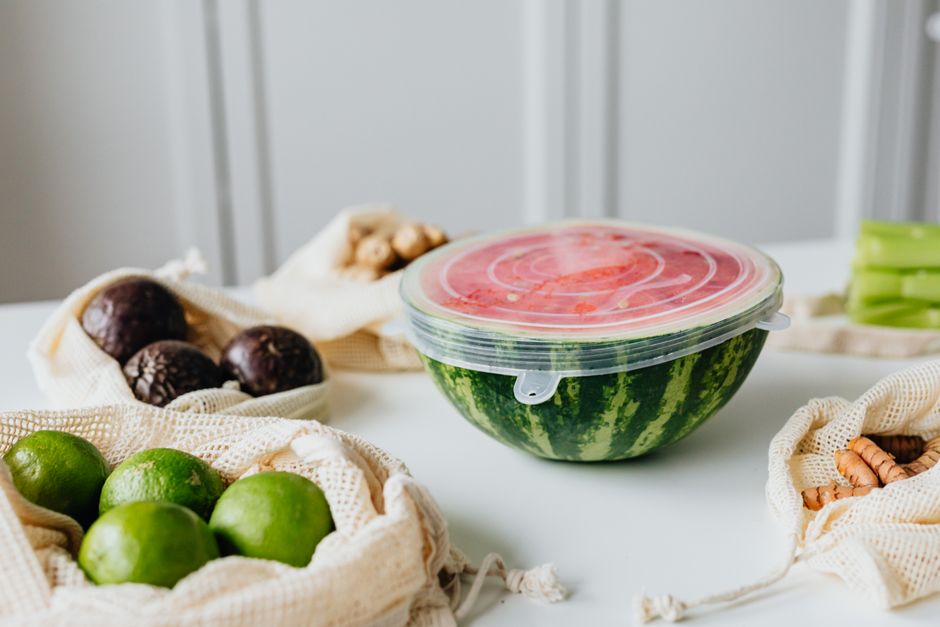
These are two different products that are often confused when comparison-shopping.
Silicone stretch lids (what this review covers) seal by stretching over the rim and using tension to hold. They work on containers without any specific rim type, can expand to fit a range of sizes, and seal from the outside.
Silicone suction lids seal by pressing flat against the container surface and creating suction — similar to a plunger. They require a smooth, flat rim, work on only one specific container size, and can be difficult to remove because the suction is strong. They’re also more sensitive to surface debris or moisture than stretch lids.
For versatility across container sizes, stretch lids are more practical. For a very tight seal on a specific container with a smooth rim — particularly useful for transporting liquids — suction lids can outperform stretch lids. Many households that have both end up using stretch lids for most tasks and suction lids in specific situations.
Storing Them Without Losing Your Mind
Nobody mentions this, and it should come up: these things are oddly annoying to store without a system. Silicone stretch lids can’t be stacked perfectly flat like rigid lids — they curl slightly, especially the smaller sizes.
A few approaches that work:
Vertical storage in a drawer: Stand the lids upright in a drawer divider or a tall, narrow container. Sort by size from smallest to largest. Makes it easy to grab the right size without digging.
Stacking small-inside-large: For flat drawer storage, nest smaller lids inside larger ones. Works reasonably well and keeps them from sliding around.
Label by size: A small piece of masking tape on each lid marked with its diameter range — applied to the non-food-contact top surface — takes the guesswork out of size selection. Sounds fussy, but if you’re regularly grabbing the wrong lid, it’s worth two minutes.
Frequently Asked Questions
Q: How do I know if silicone stretch lids are safe to use with food?
Look for lids explicitly labeled as food-grade or platinum-grade silicone, and verify that the brand provides certification documentation — ideally LFGB or EU 10/2011 compliance, not just “BPA-free.” Before using any new set, do the stretch test: pull the lid taut between both hands. If it stays clear and transparent, the silicone is likely pure. If it turns white or cloudy, there are fillers present, and you should return the product.
Q: Can I use silicone stretch lids in the oven?
It depends on the specific product’s temperature rating. Many stretch lids are rated only to 220°F (105°C), which is fine for microwave use but not for conventional oven temperatures. Some higher-end sets are rated to 450°F or 550°F and can be used in the oven. Check the temperature rating for the specific brand before using in any oven application.
Q: Why does my silicone stretch lid keep falling off?
The most common cause is a wet or slippery container rim. Silicone needs friction against the rim to maintain its grip, and any moisture — condensation, a damp rim from rinsing, liquid from the food — acts as a lubricant. Dry the rim completely before applying the lid. The second most common cause is using a lid that’s too large for the container, which means not enough tension is created to hold the seal.
Q: Are silicone stretch lids airtight?
No. They create a tension seal that keeps air out for typical refrigerator storage, but they’re not vacuum-sealed. For long-term freezer storage or produce that needs a true airtight environment, a snap-lock container or vacuum bag is more effective.
Q: How long do silicone stretch lids last?
With quality materials and normal use, a good set should last 5–10 years. Signs they need replacing: the silicone no longer stretches to fit containers it previously fit, visible cracks or tears appear around the ridged edge, persistent odor remains after washing, or the surface feels sticky or tacky. Cheap sets with fillers may show these signs within a year or two.
Q: Can silicone stretch lids be recycled?
Not through standard curbside programs in the United States. Silicone doesn’t fit into the numbered plastic resin coding system and most municipal recycling facilities can’t process it. TerraCycle has programs that accept silicone products — check their website for current availability. Some brands also offer take-back programs. When lids are no longer useful as lids, they can be repurposed as jar openers or non-slip mats before disposal.