
Plastic Free Electric Kettles: A Complete Guide to Safer Boiling
Every time you boil water in a plastic kettle, you’re likely drinking millions of microplastic particles with your morning tea. A 2020 study from the Medical University of Vienna found that plastic electric kettles release between 4 and 29 million microplastic particles per liter of boiling water — straight into your cup. Switching to a plastic free electric kettle eliminates that exposure at the source, and if you choose well, it’s also one of the more straightforward sustainability upgrades your kitchen can make.
This guide covers the science behind why plastic kettles are a problem, which materials are actually safe, where hidden plastic lurks in supposedly “plastic-free” models, and specific product recommendations organized by budget and use case. We also get into things most guides skip: the environmental case for buying right once, how to maintain your kettle so it lasts a decade, and how to verify that a kettle claiming to be plastic-free actually is.
Why Your Plastic Kettle Is a Problem
Plastic kettles are cheap, widely available, and found in millions of kitchens. They’re also one of the most direct routes synthetic chemicals take into your body every day — because you’re not just storing water in plastic, you’re boiling it there.
How Boiling Water Breaks Down Plastic
Plastic is not a stable material. It’s a polymer matrix held together by chemical bonds that weaken under heat, UV exposure, and mechanical stress. When you boil water in a plastic kettle, you’re applying sustained heat — typically 212°F (100°C) — to a material that was never designed to be thermally inert.
The degradation releases two categories of contaminants. The first is microplastics and nanoplastics: physical fragments of the plastic that break away from the interior surface and suspend in the water. These range from particles you could theoretically filter out to nanoscale fragments that pass through almost any filtration system and are absorbed directly into human tissue.
The second is chemical leaching — the migration of manufacturing additives into the water. Plasticizers, stabilizers, flame retardants, colorants, antioxidants: many of these are bioactive at very small concentrations.
Both processes accelerate with temperature. A kettle brings water to a rolling boil — the highest temperature domestic water reaches in most households — so a plastic kettle is operating at the worst possible conditions for material stability.
How Many Microplastics Are You Actually Drinking?
Research from the University of Queensland, published in npj Emerging Contaminants, found that the first boil in a new plastic kettle released approximately 12 million nanoparticles per milliliter — close to 3 billion particles in a standard 250ml cup of tea. Particle counts decrease with repeated use as the most unstable surface material sloughs off, but they never reach zero. A six-month-old kettle still releases millions of particles per boil. Those particles accumulate: microplastics have been identified in human blood, lung tissue, liver, kidney, and arterial plaque.
This isn’t a speculative future risk. It’s an ongoing daily exposure that happens every morning when you make your first cup.
The environmental side matters too. Those microplastics don’t disappear when you pour them down the drain. They pass through wastewater treatment systems — not designed to capture nanoscale particles — and enter waterways, where aquatic life ingests them. Choosing a plastic free electric kettle is a small but real reduction in the daily microplastic load flowing from your home into shared water systems.
Why “BPA-Free” Labels Are Misleading
This is the most important thing to understand before spending money on a new kettle: “BPA-free” is a marketing claim, not a safety guarantee.
BPA (bisphenol A) is an endocrine-disrupting chemical used to harden polycarbonate plastics. It mimics estrogen and has been linked to hormonal imbalances, reproductive issues, cardiovascular disease, and developmental problems in children. Regulatory pressure to remove it from consumer products was legitimate.
The problem is what replaced it.
Manufacturers substituted structurally similar bisphenols — primarily BPS, BPF, and BPAF. These were assumed safer because they hadn’t been studied as extensively. That assumption hasn’t held up. Multiple studies have found that BPS and BPF are also estrogenic and may disrupt hormonal function at concentrations comparable to BPA. Some research suggests BPS is more resistant to breakdown in the environment than BPA — potentially a more persistent pollutant, not a less harmful one.
Beyond bisphenols, most plastics contain phthalates — plasticizers used to make plastic flexible. Phthalates are established endocrine disruptors, associated with reduced testosterone, impaired fertility, and developmental effects in children. They leach from plastic under heat. A plastic kettle is a near-ideal delivery mechanism.
The bottom line: if a kettle is made of any plastic — whether it says BPA-free, BPS-free, or nothing at all — you can’t assume it’s not leaching bioactive chemicals into your boiling water. The safest approach is to remove plastic from water contact entirely.
What Materials Are Actually Safe?
Three materials have solid track records for safe food and water contact at high temperatures: food-grade stainless steel, borosilicate glass, and ceramic. Each has real advantages and at least one practical limitation.
Food-Grade 304 Stainless Steel
Food-grade 304 stainless steel (also labeled 18/8) is the most recommended interior material for non-toxic kettles. It’s corrosion-resistant, non-reactive to heat, and doesn’t leach chemicals into boiling water.
The numbers describe the alloy: 18/8 means 18% chromium and 8% nickel. Chromium forms a passive oxide layer on the surface that prevents oxidation and stops the metal from reacting with water. 18/10 is nearly identical, with 10% nickel for marginally better corrosion resistance. Both work well for kettle interiors.
The grade designation matters because not all stainless steel is equivalent. Lower-grade alloys — particularly 200-series steels that substitute manganese for nickel — are less corrosion-resistant and have been found to leach more nickel into acidic foods. When buying a kettle, look specifically for “304 stainless steel,” “18/8,” or “18/10” in the product specifications. If a listing just says “stainless steel” without a grade, that’s worth clarifying with the manufacturer.
One practical note: a small number of people have nickel sensitivities. For most, trace amounts from a 304 stainless steel kettle are negligible. If you have a documented nickel allergy, a borosilicate glass interior is the better choice.
Stainless steel is also durable, impact-resistant, recyclable at end of life, and indefinitely reusable with basic care. Hard to beat on sustainability.
Borosilicate Glass
Borosilicate glass is the material used in laboratory glassware and quality cookware like Pyrex. Its key property is thermal shock resistance — where ordinary glass would crack under rapid temperature changes, borosilicate handles the transition from cold to boiling without degrading.
From a non-toxic standpoint, borosilicate glass is essentially inert. No metals, polymers, or additives that can migrate into water. It doesn’t scratch, doesn’t absorb flavors or odors, and doesn’t change the taste of water. For people sensitive to even trace metallic notes, or who want the most chemically neutral boiling surface available, glass is the better choice.
The catch — and it’s significant — is that most glass kettles use a plastic lid. Some have a plastic water gauge window. Some have a plastic spout filter. These components contact steam and sometimes the water surface, which means they can still leach despite the glass body.
Before buying a glass kettle for its plastic-free credentials, read the product details carefully. Look for models with a stainless steel lid, stainless steel spout, and either no water gauge or a stainless steel gauge window. The product recommendations section below covers which currently available models actually pass this test.
Borosilicate glass is more fragile than stainless steel — it can crack if dropped. If you have young children, a busy household, or a reliable talent for knocking things over, stainless steel is probably the more practical choice.
Ceramic Kettles
Ceramic kettles are much less common, and for most people they’re not the first recommendation. True ceramic is chemically inert and safe at high temperatures — the concern is with glazes, which can contain lead or cadmium in lower-quality products.
High-quality, lead-free ceramic kettles do exist and are favored by some tea enthusiasts for the traditional aesthetic and neutral flavor profile. But they’re heavier, more fragile, more expensive, and less widely available than stainless steel or glass. They also tend to heat more slowly.
A ceramic kettle with documented lead-free certification and no plastic interior components is a legitimate safe choice. For most people, stainless steel or borosilicate glass offers better value and more practical durability.
What About Food-Grade Silicone?
Silicone appears in many supposedly plastic-free kettles — as gaskets, seals, or handle insulation. It raises a fair question that deserves a straight answer.
Food-grade silicone is generally considered safer than plastic at high temperatures. It doesn’t contain BPA or phthalates and is relatively stable when heated. Silicone is a silicon-oxygen polymer rather than a carbon-based chain, which gives it different thermal and chemical properties from petroleum-based plastics.
That said, “safer than plastic” isn’t the same as “completely inert.” Some research has found that silicone can release low levels of siloxanes (cyclic silicone compounds) when heated above 200°C (392°F). Water boils at 100°C, well below that threshold — so the risk from silicone in a kettle is considerably lower than from silicone used in oven baking, for example.
A thin food-grade silicone seal or gasket — used to prevent leaks at the lid joint — is an acceptable compromise, particularly if it doesn’t form the primary water contact surface. If you want to eliminate all synthetic materials from hot water contact, choose a kettle with a fully stainless steel interior and lid.
What’s not acceptable: a silicone-coated interior, silicone spout liner, or any large silicone component the boiling water actually touches. These appear in some models marketed as plastic-free and warrant real scrutiny.
Hidden Plastic in “Plastic-Free” Kettles — Where to Look
“Plastic-free” is not a regulated claim. Any brand can use it. Even kettles marketed as plastic-free often contain plastic components — they just position those components as minor or irrelevant. Here’s exactly where plastic hides, and why each location matters.
The Inner Lid
This is the most common hiding place. The exterior of the lid may be stainless steel while the interior — the side that faces the water and gets coated in steam — is a plastic or plastic-composite insert. Steam-contact plastic leaches just as readily as water-contact plastic.
When reading product descriptions, look specifically for confirmation that the interior of the lid is stainless steel. If the listing says “stainless steel lid” without specifying the interior surface, check product images closely, read verified owner reviews that describe the interior, or contact the manufacturer directly.
Water Level Windows and Gauges
Many kettles include a transparent window so you can see the water level. On stainless steel kettles, these windows are almost always plastic or acrylic — in contact with water at both cold and hot temperatures as the level rises and falls.
Some higher-end stainless steel kettles eliminate the window entirely, using a fill marker on the lid or interior. Others use a borosilicate glass gauge tube. If a window is present and not specified as glass, assume it’s plastic.
Spout Filters and Strainers
Most kettles include a small mesh strainer at the spout to catch limescale. On budget and mid-range models, this filter is frequently plastic mesh. Even when the kettle body is stainless steel, every pour passes through this filter.
A stainless steel mesh filter is the right substitute. Some kettles include this by default — worth checking specifically, since it’s rarely prominently mentioned in listings.
The Heating Element Base
The heating plate at the bottom is where the water heats. On most modern electric kettles, the heating element is fully enclosed beneath a stainless steel plate — generally fine. The concern is the junction between the heating element base and the kettle body. Some manufacturers use plastic or epoxy sealants at this junction, submerged in the water. Look for kettles where the manufacturer specifically states the entire interior, including the base, is food-grade stainless steel with no plastic sealants.
How to Verify a Kettle Is Truly Plastic-Free
Given that marketing claims aren’t regulated, here’s a practical approach:
Read the full specification table, not just the headline. Product listings often bury the material of the lid interior, filter, and gauge in a specifications tab rather than in the feature bullets.
Search for third-party reviews that examine interior construction. Tea blogs and non-toxic living sites tend to look at these details more carefully than general consumer reviews.
Look for specific material certifications. NSF/ANSI 51 (food equipment materials) and FDA compliance for food contact materials are the most relevant US standards. German TÜV certification and EU food contact regulations (EC No 1935/2004) are quality markers for European-market products. These certifications indicate materials have been tested for leaching.
Contact the manufacturer directly. Ask specifically: “Is the interior of the lid stainless steel or plastic? Is the spout filter metal mesh? Are there any plastic components in contact with water?” A manufacturer confident in their product will answer clearly. One that deflects or redirects to “BPA-free” is telling you something.
Check product images at full resolution. Most listings now include enough angles and detail that you can see lid interiors, filter materials, and gauge windows if you look carefully.
The Best Plastic Free Electric Kettles
These recommendations are based on documented material specifications, owner feedback, and hands-on editorial evaluation where available. Each entry includes a plastic-free verdict — an honest summary of what plastic, if any, is present and where.
Editorial criteria: the water-contact interior must be 304 stainless steel or borosilicate glass. The lid interior must be metal. The spout filter must be metal mesh. External plastic on the base, power switch, or handle exterior is noted but not disqualifying, since it doesn’t contact water.
Best All-Around: ASCOT Stainless Steel Electric Kettle
Material: 304 stainless steel interior and lid | Capacity: 1.7L | Wattage: 1500W | Price range: $45–$60
The ASCOT is the most consistently recommended plastic-free electric kettle across the non-toxic living community, and its specs back that up. The interior is brushed 304 stainless steel, the lid interior is stainless steel, and the spout filter is stainless steel mesh. No plastic window — water level is indicated by an external measurement guide. The swivel base is plastic for electrical insulation, which is standard and appropriate.
It heats 1.7 liters in roughly 5–7 minutes, the auto shut-off is reliable, and the handle stays cool. Build quality is noticeably solid for the price.
Limitation: No variable temperature. It boils to 100°C only. If you make green tea or other teas requiring lower temperatures (around 70–80°C), you’ll need to let it cool or use a separate thermometer.
Plastic-free verdict: Passes. No plastic in water contact. External base uses plastic for electrical safety — expected and appropriate.
Best Budget Pick: Miroco Stainless Steel Electric Kettle
Material: 304 stainless steel interior | Capacity: 1.5L | Wattage: 1500W | Price range: $35–$45
The Miroco brings food-grade stainless steel construction to a genuinely accessible price. The interior is smooth 304 stainless steel without a plastic lining, the lid is stainless steel, and the spout filter is stainless steel mesh. The base and handle grip are plastic — standard, and neither contacts water.
Limitation: A small plastic collar at the lid hinge sits in the steam zone. It’s a minor concern rather than a dealbreaker — a small component at the periphery — but it places this kettle slightly below the ASCOT in strict plastic-free terms.
Plastic-free verdict: Very good. Minor plastic component at lid hinge in steam contact. A strong value for those switching from plastic kettles on a tighter budget.
Best Gooseneck (Pour-Over Coffee and Specialty Tea): Fellow Stagg EKG
Material: Polished stainless steel interior | Capacity: 0.9L | Wattage: 1200W | Price range: $165–$185
The Fellow Stagg EKG is the go-to gooseneck kettle for pour-over coffee and precision tea, and it’s also one of the cleaner material choices available. The interior, gooseneck spout, and lid are all stainless steel. Variable temperature control runs from 135°F (57°C) to 212°F (100°C) in one-degree increments, and the temperature hold function keeps your target temperature for up to 60 minutes — genuinely useful across multiple pours.
Plastic appears in the base and handle grip. Neither contacts water.
For the specialty coffee and tea drinker who already cares about water quality and flavor purity, the plastic-free angle aligns directly with why you’d want a precision kettle. Plastic imparts flavor. Stainless steel doesn’t.
Limitation: Premium price and a small 0.9L capacity. Not designed for boiling large quantities. Built for single-serve or two-cup brewing precision.
Plastic-free verdict: Passes. Stainless steel interior, lid, and spout. External base and handle grip contain plastic, no water contact.
Best Gooseneck Budget Alternative: Cosori Original Electric Gooseneck Kettle
Material: 304 stainless steel interior | Capacity: 0.8L | Wattage: 1200W | Price range: $40–$55
The Cosori gooseneck offers variable temperature (104°F to 212°F), a keep-warm function up to two hours, and a real-time temperature display — at a fraction of the Fellow Stagg EKG’s price. Interior and spout are 304 stainless steel.
Limitation: The lid is plastic on some production runs. Cosori has updated this model across versions, so verify your specific listing specifies a stainless steel lid interior before purchasing.
Plastic-free verdict: Conditional pass — verify lid material before buying. Interior and spout are stainless steel.
Best Glass Option: COSORI Electric Glass Kettle with Stainless Steel Interior Base
Material: Borosilicate glass body, stainless steel interior base and filter | Capacity: 1.7L | Wattage: 1500W | Price range: $35–$50
The most consistent glass kettle available at an accessible price. The body is borosilicate glass, the interior base plate is stainless steel, and the spout filter is stainless steel mesh. The lid is plastic — positioned above the waterline but in the steam environment, which is a real concern if you’re applying strict plastic-free standards.
For the glass aesthetic — visible boiling water, no metallic taste, clean look — at a reasonable price, this is the strongest option currently available in this category.
Limitation: The plastic lid is the primary issue. If a metal-lid glass kettle is your target, the Chantal option below is worth the extra cost.
Plastic-free verdict: Partial pass. Borosilicate glass body, stainless steel base and filter. Plastic lid in steam contact. Best glass option at this price, but not fully plastic-free.
Best Compact Pick: Chantal Mia eKettle
Material: Enamel-on-steel body, stainless steel interior | Capacity: 1.2L | Wattage: 1200W | Price range: $80–$100
The Chantal Mia fills a specific niche: a compact kettle with visual appeal and genuinely clean construction. Interior, lid, and spout filter are all stainless steel.
A note on the enamel exterior: Chantal’s enamel-on-steel is a fired glass coating applied to steel — the same technology used in enamel cookware. It’s chemically inert and does not contact water. This is different from painted plastic coatings, which are a separate category of concern.
Limitation: The 1.2L capacity limits it to smaller households or single users. The exterior enamel can chip if knocked against a hard surface.
Plastic-free verdict: Passes. Stainless steel interior, lid, and filter. Enamel exterior is safe and does not contact water.
Best for Families: SAKI Luna Electric Kettle
Material: 304 stainless steel interior (double-wall) | Capacity: 1.7L | Wattage: 1500W | Price range: $70–$90
The SAKI Luna uses double-wall stainless steel construction, which keeps the exterior cool to the touch — a real safety feature for households with children. Interior is 304 stainless steel, lid interior is stainless steel, filter is stainless steel mesh. Variable temperature settings (160°F to 212°F) and a 30-minute keep-warm function make it practical for households with varied tea and coffee preferences.
Build quality here is among the best in the under-$100 category. The lid mechanism is tight, the pour is controlled, and the double-wall exterior doesn’t heat up even holding near-boiling water.
Limitation: The polished finish shows fingerprints. Minor aesthetic issue, not a functional one.
Plastic-free verdict: Passes. 304 stainless steel interior and lid, metal spout filter. Double-wall construction with no plastic in water contact.
Electric vs. Stovetop — Which Is More Plastic-Free?
For the eco-conscious reader, this is worth taking seriously. An electric kettle — even a fully stainless steel one — contains electrical components, a plastic base with wiring and insulation, a circuit board, and various synthetic materials required by electrical safety standards. A stovetop kettle has none of those.
The Case for a Stainless Steel Stovetop Kettle
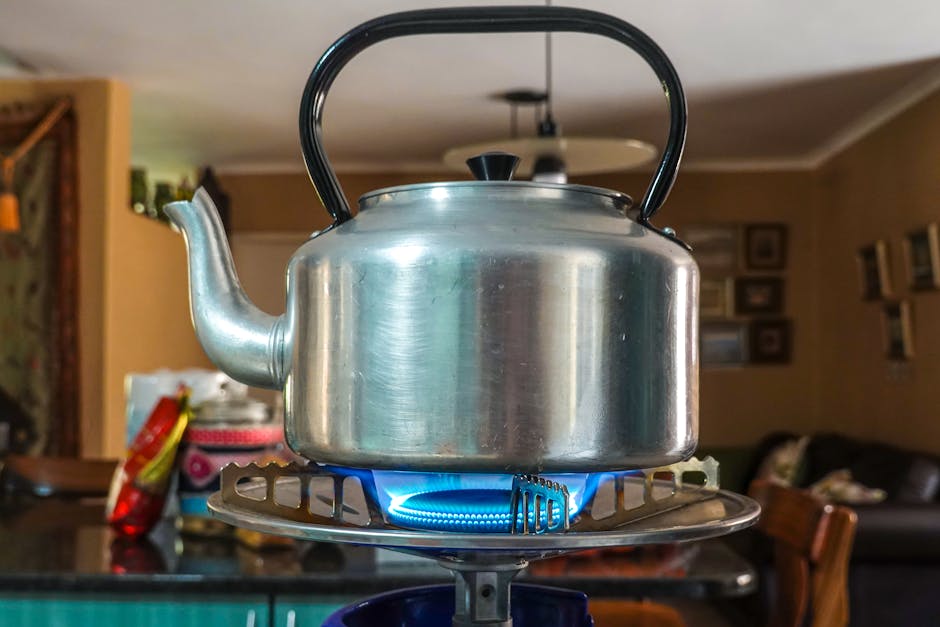
A stainless steel stovetop kettle is, strictly speaking, the most plastic-free water-boiling option available. The design can be entirely metal — stainless steel body, handle, lid, base plate. No electrical components, no plastic insulation, no circuit boards.
From a zero-waste and end-of-life perspective, an all-metal stovetop kettle is almost entirely recyclable. It requires no electronics manufacturing, no rare earth materials, and no complex assembly. With basic care, it lasts indefinitely. If you have an induction or gas stove and don’t need the speed of auto-boil, a stovetop kettle is arguably the most sustainable option of all.
Recommended options include the Cuisinart Classic Whistling Kettle (stainless steel, no plastic components), the All-Clad Stainless Steel Stovetop Kettle, and the Le Creuset Enamel Kettle for those who want color.
When an Electric Kettle Makes More Sense
There are real arguments for electric kettles even from a sustainability standpoint.
Electric kettles are more energy-efficient than stovetop boiling. A 1500W electric kettle heats 1.7L in about 5–7 minutes. Boiling the same amount of water on a gas stove is less efficient because gas flames transfer energy to the water less directly. On an electric stove, the comparison is closer, but an electric kettle still tends to win because it heats the water rather than the surrounding vessel and air. For households that boil water multiple times a day, this difference adds up.
Electric kettles also offer variable temperature control — genuinely important for specialty tea and pour-over coffee — which stovetop models can’t replicate without an external thermometer.
Recommendation by Situation
If you live alone or with one other person, use a gas or induction stove, and value simplicity over convenience features: a stainless steel stovetop kettle is the most zero-waste, most plastic-free option available.
If you have a family, boil water multiple times daily, or need variable temperature control: a stainless steel electric kettle (304 grade, stainless steel lid and filter) is the practical choice and still a substantial improvement over any plastic kettle.
If you’re primarily a pour-over coffee or specialty tea drinker: a gooseneck electric kettle with a stainless steel interior — like the Fellow Stagg EKG — gives you plastic-free construction and precision brewing control that no stovetop option can match.
Is a Plastic-Free Kettle More Eco-Friendly?
Yes — but the reasoning is more interesting than most people expect.
The Environmental Cost of Cheap Plastic Kettles
A typical budget plastic kettle retails for $20–$35 and lasts 2–4 years before the housing cracks, the heating element burns out, the lid mechanism breaks, or limescale becomes impossible to remove from pitted plastic surfaces.
Manufacturing that kettle requires petroleum-derived plastics, electronic components, rare earth materials for the heating element, and global shipping. When it fails, the mix of plastic and electronics makes it difficult to recycle — most municipalities don’t accept small kitchen appliances in curbside recycling. It goes to landfill, where the plastic body persists for 400+ years while slowly fragmenting into microplastics that enter soil and groundwater.
Over 15 years, you might replace that kettle four to six times. Each replacement goes through the full manufacturing and disposal cycle.
Stainless Steel vs. Glass — Which Is More Sustainable?
Stainless steel manufacturing is energy-intensive. Producing steel requires mining iron ore, chromium, and nickel, then processing at high temperatures. But stainless steel is one of the most recycled materials on earth — recycling rates exceed 85% globally, and the process is well-established and energy-efficient relative to virgin production. A stainless steel kettle that reaches end of life can be fully recycled into new steel products.
Borosilicate glass manufacturing requires silica sand, borax, and high-temperature kilns. The energy input is significant, and glass recycling — while possible — is less efficient than stainless steel recycling for specialty glass, which is processed separately from ordinary container glass. Glass also weighs more per unit, which slightly increases shipping emissions.
Stainless steel has a slight edge in lifecycle sustainability, primarily because of superior recyclability and durability. Glass is a close second and has the advantage of being completely chemically inert — no leaching risk under any conditions.
Both materials are dramatically more sustainable than plastic across any lifecycle measure you apply.
Buy Once, Use for a Decade
A quality 304 stainless steel electric kettle, properly maintained, should last 10–15 years. The heating element is the most likely failure point, but in well-built models it’s also the most durable component.
At $70–$90 for a premium stainless steel kettle, you’re paying roughly $5–$9 per year over a 15-year lifespan. A cheap plastic kettle replaced every three years costs $7–$12 per year. The plastic-free option isn’t just healthier and less wasteful — it’s cheaper over any time horizon longer than three years.
What looks like frugality (buying cheap) is usually the more expensive, more wasteful choice. The kettle you buy once and never think about again is the more efficient use of your money, your time, and everyone’s resources.
How to Care for Your Plastic-Free Kettle
Maintenance is the difference between a kettle that lasts three years and one that lasts fifteen. Limescale buildup is the primary enemy of both heating efficiency and longevity.
Descaling Stainless Steel Kettles
Limescale is calcium and magnesium carbonate deposited from hard water. It builds up on the heating element and interior walls, reducing heat transfer efficiency and eventually causing element failure if left unchecked.
White vinegar method: Fill the kettle halfway with equal parts white vinegar and cold water. Bring to a boil, leave the solution for 30–60 minutes, then empty and rinse. Boil a full kettle of clean water once or twice to clear any residual vinegar taste. Works well for moderate buildup.
Citric acid method: Dissolve 1–2 teaspoons of food-grade citric acid powder in a full kettle of water. Bring to a boil, leave for 30 minutes, then rinse thoroughly. Citric acid is slightly more effective than vinegar for heavy scale and leaves no flavor residue. Widely available at grocery stores and bulk suppliers.
In hard water areas, descale monthly. In moderate water hardness, every two to three months. Soft water areas may need descaling only twice a year.
After descaling, wipe the interior with a soft cloth to remove loosened deposits. Avoid steel wool or abrasive scrubbers — they scratch the surface and make future scale adhesion easier.
Cleaning Borosilicate Glass Kettles
Glass kettles are slightly simpler to clean because you can see the scale buildup clearly. Use the same white vinegar or citric acid method described above.
One caution with glass: thermal shock. Don’t pour cold cleaning solution into a hot kettle, and don’t rinse a boiling-hot glass kettle under cold water. Allow it to cool to room temperature first. Borosilicate glass handles the gradual heating of a normal boil cycle well — it’s sudden, extreme temperature differentials that cause stress fractures over time.
Don’t use the dishwasher for glass kettles unless the manufacturer explicitly approves it. Most glass kettles are not dishwasher-safe, and the detergent and temperature cycling can compromise both the glass and any seals over time.
Frequently Asked Questions
Are plastic free electric kettles really safer than regular kettles?
Yes, with one important qualification: they’re safer at the water contact points. A stainless steel electric kettle still contains plastic components — in the base, wiring insulation, and power switch — but none of those touch the water. What matters for your health is what the boiling water contacts directly: the interior walls, lid, and spout filter. A kettle with 304 stainless steel in all those locations eliminates the microplastic and chemical leaching that makes plastic kettles a daily exposure risk.
What’s the best plastic free electric kettle for someone on a budget?
The Miroco Stainless Steel Electric Kettle ($35–$45) is the strongest budget option. It has a 304 stainless steel interior, stainless steel lid, and stainless steel mesh filter. The one caveat is a small plastic collar at the lid hinge in the steam zone — minor, but worth knowing about. If you can stretch to $45–$60, the ASCOT doesn’t have that issue and is the better all-around choice.
Can I use citric acid to descale a stainless steel kettle?
Yes, and it’s actually the better option for heavy limescale. Dissolve 1–2 teaspoons of food-grade citric acid powder in a full kettle of water, bring to a boil, leave for 30 minutes, then rinse thoroughly. It’s more effective than white vinegar for stubborn deposits and doesn’t leave any flavor residue. Available at most grocery stores and bulk food suppliers.
Is a glass kettle or a stainless steel kettle better?
For chemical inertness, glass is the gold standard — borosilicate glass is completely non-reactive under any conditions. For durability, recyclability, and everyday practicality, stainless steel has the edge. The practical issue with glass kettles is that most come with a plastic lid, which undermines the plastic-free purpose. If you want a glass kettle, verify the lid is stainless steel before buying. The COSORI glass kettle is the best option at an accessible price, though its plastic lid is a real limitation.
How do I know if a kettle is truly plastic free?
Check the interior lid surface (not just the exterior), the spout filter material, and whether there’s a water gauge window and what it’s made of. Look for NSF/ANSI 51 certification or FDA food contact compliance in the specs. If the listing doesn’t specify these details clearly, contact the manufacturer and ask directly: “Is the interior of the lid stainless steel? Is the spout filter metal mesh? Are there any plastic components in contact with the water?” A straight answer is a good sign. Deflection toward “BPA-free” language is not.