
Best Airtight Glass Jars for Pantry (2025): Eco-Tested Picks for a Zero-Waste Kitchen
The best airtight glass jars for pantry storage do three things plastic containers never reliably do: they keep food genuinely fresh, they don’t leach anything into what you eat, and they last long enough that you stop thinking about replacing them. Switching from plastic bins and zip-lock bags to glass isn’t just an aesthetic upgrade — it’s one of the highest-leverage, lowest-effort decisions you can make for a healthier, lower-waste kitchen.
We evaluated the top options against three criteria: real seal integrity (not just marketing claims), sustainability of materials including lids, and practical durability for everyday pantry use. What follows is everything you need to make the switch confidently — and only once.
Why Glass Beats Plastic for Pantry Storage
The Non-Toxic Case: What BPA-Free Doesn’t Tell You
“BPA-free” has become a standard label on plastic food containers, and it’s created a false sense of safety. BPA (bisphenol A) is an endocrine-disrupting chemical that was removed from most food-grade plastics after significant regulatory pressure. But here’s what that label doesn’t tell you: the plastics that replaced BPA often contain structurally similar compounds — BPS (bisphenol S), BPF (bisphenol F), and various phthalates — that have shown similar hormone-disrupting effects in research.
A 2020 study published in Environmental Science & Technology found that BPA-free plastics can still leach endocrine-disrupting chemicals, particularly when exposed to heat or UV light. That covers a lot of everyday situations: a plastic canister sitting near a sunny window, or one you’ve run through the dishwasher repeatedly.
Glass is chemically inert. It doesn’t absorb odors, won’t stain, and doesn’t react with acidic foods like tomato paste, citrus zest, or vinegar-based condiments. There’s no meaningful equivalent concern with food-grade glass. For a pantry full of ingredients you cook with regularly — and feed to your family — that distinction matters.
One nuance worth flagging: if your glass jars have plastic lids, the lid is still plastic. A glass jar with a standard plastic snap lid isn’t a fully non-toxic storage system. We cover lid materials in detail in the buying guide below.
Glass Lasts Decades — Plastic Doesn’t
Most plastic food containers crack, warp, stain, or develop micro-scratches within a few years of regular use. Those micro-scratches aren’t just cosmetic: they harbor bacteria and make the surface harder to clean. They also accelerate chemical leaching.
Quality glass jars don’t warp, don’t scratch in any meaningful way, and don’t degrade with normal use. A set of Le Parfait or Weck jars bought today could realistically still be in your pantry in 20 years. The upfront cost is higher, but the cost per year of use makes glass significantly cheaper over time than repeatedly replacing cracked plastic containers.
Glass is also 100% recyclable and can be recycled indefinitely without loss of quality or purity, according to the Glass Packaging Institute. Most plastic food containers are technically recyclable but practically aren’t — contamination, mixed plastic types, and limited recycling infrastructure mean the majority end up in landfill.
The honest trade-off: glass is heavier, breakable, and more expensive upfront. If you have young children grabbing things off low shelves, or if you’re storing things near hard floors and clumsy hands, those are real considerations. But for a dedicated pantry or kitchen cabinet, glass is the more durable long-term choice.
The Food Waste Connection: How Airtight Seals Reduce What You Throw Away
About one-third of all food produced globally is lost or wasted each year — roughly 1.3 billion tonnes, according to the UN Food and Agriculture Organization. A significant share of household food waste comes not from forgetting food exists, but from food going stale, moldy, or rancid before it’s used. Inadequate storage is a direct cause.
Airtight glass jars limit oxygen exposure, which is the primary driver of staleness in dry goods like grains, nuts, flour, and spices. A bag of almond flour left folded over in a paper bag will go rancid in weeks; in an airtight glass jar, it lasts months. Proper storage isn’t just a freshness preference. It’s a genuine reduction in how much food — and money — you throw away.
What “Airtight” Actually Means — And How to Tell if a Jar Really Is
“Airtight” is used liberally in product listings. Not all seals perform equally, and some products that claim to be airtight are more accurately described as “well-fitted.”
The 4 Seal Types Explained
1. Clamp Lid with Rubber or Silicone Gasket
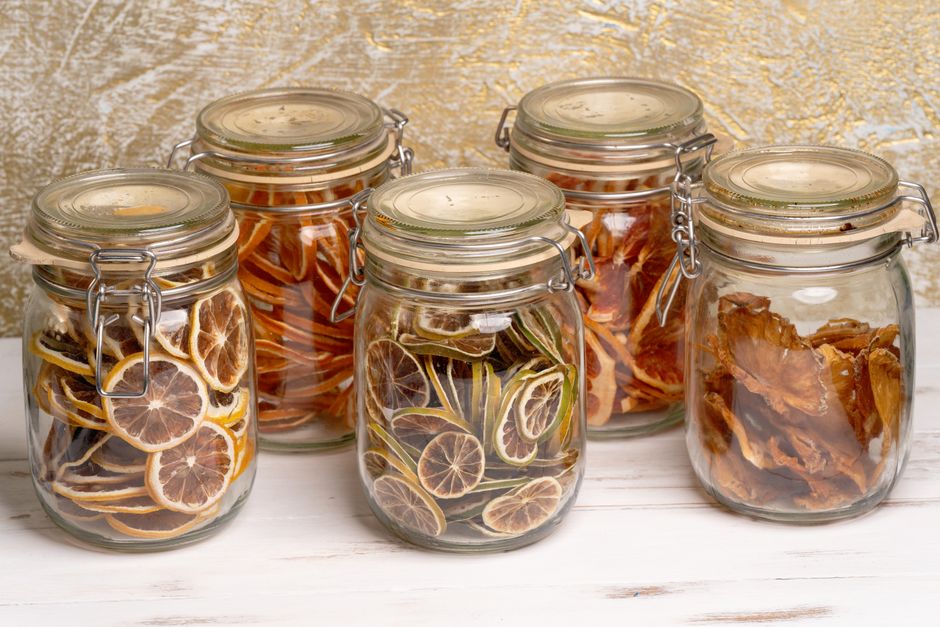
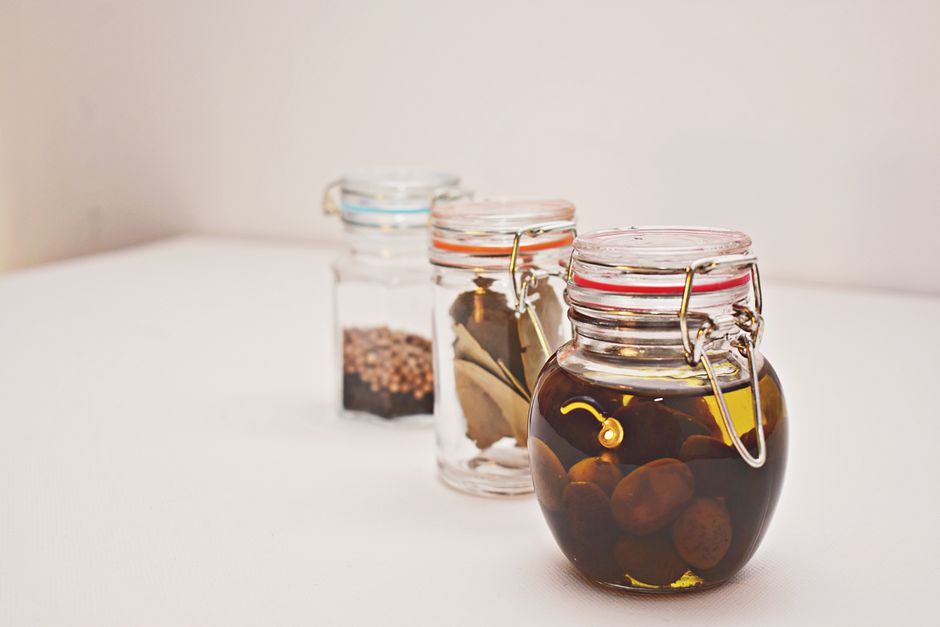
This is the gold standard for airtight pantry storage. A hinged wire bail or clamp presses a glass lid against a silicone or rubber gasket seated in a groove around the jar’s rim. Brands like Le Parfait, Weck, and Kilner use this mechanism. The result is a reliably airtight seal that maintains freshness for months with dry goods, and creates a vacuum-like seal for preserved or fermented foods.
The seal depends on the gasket being in good condition and seated correctly. A warped, cracked, or slightly misaligned gasket will break the seal — but these are detectable issues, and gaskets are replaceable.
2. Twist-Top Silicone Seal
Screw-top lids with a silicone ring embedded in the lid create a seal when tightened. These work well for most dry pantry goods and are easy to open one-handed. OXO Pop containers use a variation of this. Seal quality depends on lid fit and how firmly you close it — good, but not quite as consistently airtight as a clamp mechanism, because seal pressure varies with each person and each closing.
3. Vacuum-Seal (Pump-Assisted)
Some storage systems include a hand pump that removes air from inside the jar before sealing. These create a true partial vacuum, measurably extending freshness beyond a standard airtight seal. More expensive and require an extra step, but for things like coffee beans, ground spices, or expensive nuts you want to keep for months, worth considering.
4. Press-Fit Glass Lid
A ground-glass or cork-fitted lid that sits directly on the jar without a separate gasket. These appear on some vintage-style apothecary jars. They look good on a shelf, but they’re the weakest seal option here — better for display or very short-term storage than for maintaining freshness over weeks.
How to Test an Airtight Seal at Home
Two reliable home tests, no special equipment needed:
The Water Test: Fill the jar with water, close the lid securely, turn it upside down over a towel, and leave it for 60 seconds. Any drip means the seal isn’t airtight. Works for clamp lids and twist-tops.
The Paper Test: Close an empty jar on a thin strip of paper so the paper runs through the seal. Try to pull the paper out. If it slides free easily, the gasket isn’t creating meaningful compression. You should feel consistent resistance across the full circumference.
If your jar fails either test, check whether the gasket is seated evenly, not cracked, and not warped from heat exposure. Replace the gasket before concluding the jar itself is the problem.
When Gaskets Fail — And What to Do About It
Silicone gaskets typically last 1 to 3 years with regular use before they begin to lose sealing integrity — especially after frequent dishwasher cycles at high heat, or if stored wet. Signs of a failing gasket: visible cracking, loss of elasticity, or a jar that repeatedly fails the water test even when correctly assembled.
You don’t need to replace the jar. Le Parfait and Weck both sell replacement gaskets separately, and Weck gaskets are widely available online and at kitchen specialty stores. Kilner sells replacement rubber rings for their clip-top jars as well. A replacement gasket for $2–4 instead of a new jar for $15–25 is exactly the kind of repair-over-replace behavior a sustainable kitchen runs on.
Rubber gaskets (used in older Le Parfait and some Kilner styles) are generally less durable than silicone but often cheaper to replace. Silicone gaskets are more heat-tolerant, last longer, and are the better long-term choice.
How to Choose the Right Glass Jar for Your Pantry
Capacity Guide: Which Size for Which Ingredient
Getting the size right matters both for freshness (a jar that’s too large for its contents holds excess air) and for shelf organization.
| Jar Size | Volume (approx.) | Best For |
|---|---|---|
| Extra Small | 100–200 mL | Peppercorns, saffron, vanilla beans, small spice quantities, baking soda (small households) |
| Small | 250–350 mL | Ground spices, dried herbs, baking soda, baking powder, salt, yeast |
| Medium | 500–750 mL | Nuts, seeds, dried fruit, oats, brown sugar, breadcrumbs, lentils |
| Large | 1–1.5 L | All-purpose flour, white rice, quinoa, granola, pasta, rolled oats |
| Extra Large | 2–3 L | Bulk flour, sugar, popcorn kernels, large dried bean reserves |
A few specifics that make a real difference in practice: dried peppercorns belong in a 200 mL jar, not a 500 mL one — the smaller jar keeps them fresher and easier to use. Whole grain flours go rancid faster than white flour because of their natural oils, so storing them in a truly airtight seal (clamp or vacuum) matters more than it does for all-purpose flour.
Lid Material Breakdown: Bamboo vs. Stainless vs. Plastic
This is where most buyer’s guides stop short — listing lid materials as aesthetic options without evaluating what they actually mean for a zero-waste kitchen.
Bamboo Lids
Bamboo is a fast-growing grass that requires minimal water and no pesticides — a genuinely low-impact raw material. But the sustainability of a bamboo lid depends heavily on how it’s processed. Many bamboo lids sold for kitchen storage are finished with lacquer, resin, or food-safe varnishes that are petroleum-derived. Some contain formaldehyde-based adhesives in the lamination. Those finishes mean the lid isn’t home-compostable at end of life, despite bamboo’s natural credentials.
A bamboo lid with a certified food-safe, non-toxic finish from a brand that discloses its supply chain (look for FSC-certified bamboo and water-based finishes) is a reasonable eco choice. A generic bamboo lid from an unverified source is, at best, neutral — and at worst, greenwashing dressed up in natural aesthetics. Ask the brand directly what finish they use. If they can’t tell you, that’s informative.
Bamboo lids also typically include a silicone sealing ring for airtightness, which is a plus for seal performance.
Stainless Steel Lids
Stainless steel is durable, non-toxic, and fully recyclable through metal recycling streams. It doesn’t degrade, doesn’t leach, and doesn’t need any coating to be food-safe. The production of stainless steel is energy-intensive, but a lid you use for 20 years has a very low per-use environmental footprint.
The downside: stainless steel lids on screw-top jars don’t always create a tight seal without a silicone insert — check that the lid includes one. Also, some stainless lids aren’t compatible with acidic ingredients stored long-term (vinegar-based sauces can react with lower-grade steel), though this is rarely an issue for dry pantry goods.
For end-of-life recyclability, stainless steel is the most defensible choice: recyclable through standard metal recycling, indefinitely.
Plastic Lids
Most glass jars with snap-on or screw-top plastic lids use polypropylene (PP, recycling code #5). PP is considered food-safe and is less prone to leaching than polycarbonate, but it’s still plastic — and most curbside recycling programs in the US don’t accept small plastic lids reliably. PP lids end up in landfill more often than not.
BPA-free PP lids are the baseline standard for reputable brands. If you’re buying glass jars with plastic lids, look for #5 PP specifically, avoid lids without a resin code, and don’t run them through the dishwasher at high heat if you want to minimize any leaching risk. But be honest with yourself: if your goal is a genuinely non-toxic, low-waste storage system, a glass jar with a stainless steel or properly-finished bamboo lid is more consistent with that goal than a glass jar with a plastic lid. [VERIFY — BPA-free leaching risk claim should be cross-checked against a regulatory source, not only the cited study]
Sustainability Scorecard:
- Stainless steel lid: ★★★★★ — durable, non-toxic, fully recyclable
- Bamboo lid (verified, non-toxic finish): ★★★★☆ — low-carbon material, some processing concerns
- Bamboo lid (unverified): ★★★☆☆ — uncertain; check manufacturer claims
- Silicone gasket + glass lid (clamp system): ★★★★★ — replaceable parts, no plastic, lasts decades
- PP plastic lid (BPA-free): ★★☆☆☆ — functional, but low recyclability, minor leaching risk
Shape and Shelf Efficiency: Round vs. Square vs. Cylinder
Round jars waste corner space on rectangular shelves. That’s not a minor concern if you have a standard pantry cabinet with limited depth — every round jar leaves dead space at its shoulders that a square jar would fill.
Round jars are the traditional mason-jar format. Widely available, easier to manufacture, and often more affordable. If you have deep shelves or open shelving where the look matters, round jars read well from most angles. The trade-off is roughly 20–25% less shelf efficiency compared to square formats.
Square and rectangular jars tile a shelf without gaps. Brands like Anchor Hocking and OXO make square-footprint containers that can fully cover a shelf. If you’re organizing a small pantry or a single cabinet, that efficiency adds up.
Wide-mouth cylinders (the classic canning jar form) sit somewhere in between — slightly more efficient than narrow-mouth rounds and much easier to scoop from. A practical advantage for flour, oats, and anything you measure with a cup or spoon.
For deep pantries: use taller jars at the back and shorter ones at the front, or install a step riser shelf. Label the lids, not just the front face — you’ll thank yourself when jars are stacked or positioned at depth.
For small-cabinet kitchens: square-footprint jars with flat, stackable lids are the most practical choice.
Key Features to Look For
Glass type: Most pantry jars are soda-lime glass — the standard, and perfectly adequate for dry storage. Borosilicate glass is more resistant to thermal shock, which matters if you’re moving jars from freezer to countertop or using them for oven baking. For purely pantry use, borosilicate’s main advantage is marginal extra impact resistance. If two otherwise equal jars differ only in glass type, borosilicate is worth a slight premium. Don’t pay a significant one just for pantry storage.
Mouth width: Wide-mouth jars (70mm+ opening) are dramatically easier to fill, scoop from, and clean. For anything you measure by the cup — flour, grains, nuts — wide-mouth is the practical choice. For spice jars and small-volume storage, a narrower mouth is fine.
Stackability: Look for flat-topped lids or lids with an indentation that accommodates stacking. Some clamp-lid jars aren’t stackable because the clamp mechanism creates an uneven top surface. Check this before buying if vertical storage matters to you.
Transparency: Most pantry storage is fine in clear glass, and clear gives you instant visibility of what’s inside and at what level. Amber glass blocks UV and is worth considering for herbs, teas, or certain oils if your pantry gets significant light exposure.
The Best Airtight Glass Jars for Pantry — Our Top Picks
Best Overall: Le Parfait Super Jar
Le Parfait’s Super Jar is the benchmark for what airtight glass storage should be. The wire bail clamp and orange rubber gasket create a genuinely reliable seal — not marketing airtight, but mechanically airtight. The glass is thick, the build quality is immediately apparent, and these jars are made in France with a manufacturing history that predates the entire “eco kitchen” trend by decades. That’s not a pitch; it’s just what they are.
Eco credentials: Glass lid, rubber gasket (replaceable separately), stainless steel bail clamp. Zero plastic in the sealing system. The rubber gaskets are natural rubber, which is biodegradable — a meaningful detail for zero-waste households.
Available sizes: 250 mL, 500 mL, 750 mL, 1 L, 1.5 L, 2 L, 3 L
Pros:
- Exceptional seal integrity — consistently passes the water test
- Fully replaceable gaskets
- No plastic in the sealing system
- Stackable when stored without the clamp
- Look good on open shelving without trying to
Cons:
- Higher upfront cost than most competitors
- Rubber (not silicone) gaskets are slightly less heat-tolerant — hand-wash recommended
- Clamp mechanism adds height, limiting some stacking configurations
- Available primarily online or at specialty kitchen stores
Best for: Staples you use regularly — flour, grains, nuts, dried legumes, oats. The sizes scale up well for bulk storage.
Best for Spices and Small Quantities: Weck Mold Jars (Small)
Weck’s small mold jar (165 mL and 290 mL sizes) is one of the most practical spice storage solutions on the market. The glass is thick, the seal mechanism (glass lid + silicone gasket + two metal clips) is the same reliable clamp system used in their canning jars, and the jars are genuinely beautiful without being precious about it.
Eco credentials: Glass lid, silicone gasket (replaceable — Weck sells them in multi-packs), stainless steel clips. No plastic in the seal system. Weck is a German company with strong manufacturing standards and transparent supply chain information.
Available sizes: 80 mL, 165 mL, 290 mL, 370 mL (and the full Weck range goes much larger)
Pros:
- Silicone gaskets — more durable and heat-tolerant than rubber
- Replacement gaskets widely available, under $5 for a multi-pack
- No plastic anywhere in the seal
- Uniform aesthetic across the Weck range — all jars look intentional together
Cons:
- Metal clips can pop off if a jar is dropped — not a failure of the jar, but worth knowing
- Small sizes fill quickly with coarser spices like flake salt or dried herbs
- The lid-and-clip system has a slightly higher learning curve than a simple screw top
Best for: Spices, dried herbs, vanilla extract, small seed quantities, tea.
Best Budget Pick: Ball Wide-Mouth Mason Jars
Ball mason jars are the approachable entry point for anyone transitioning from plastic to glass. They’re inexpensive (often under $15 for a 12-pack of pint jars), universally available, and compatible with a large ecosystem of lids, fermentation accessories, and storage solutions.
Eco credentials: The jars are soda-lime glass and fully recyclable. The standard two-piece lid (flat disc + screw band) is where sustainability gets complicated: the flat lid disc is a single-use seal designed for canning, not repeated pantry use. For pantry storage specifically, pair Ball jars with a reusable lid alternative — Tattler makes reusable wide-mouth lids with silicone gaskets that fit Ball jars, or you can use wooden or stainless caps designed for mason jar widths.
Available sizes: Half-pint (237 mL), pint (473 mL), quart (946 mL), half-gallon (1.89 L)
Pros:
- Lowest per-jar cost on this list
- Widely available at grocery stores, hardware stores, online
- Large accessory ecosystem
- Quart and half-gallon sizes work well for bulk dry goods
- Wide-mouth variant is easy to fill and clean
Cons:
- Standard two-piece lid is designed for single-use canning — needs a reusable lid upgrade for pantry use
- Round jar shape is less shelf-efficient than square alternatives
- Twist-top seal is less consistently airtight than a clamp system
Best for: Building a starter pantry jar collection on a budget, especially when paired with reusable lid upgrades.
Best for Bulk Storage: Anchor Hocking Montana Jars
The Anchor Hocking Montana jar is a large-format, square-footprint glass canister with a plastic lid that creates a reliable press-seal. At 1-gallon capacity, it handles bulk dry goods — flour, sugar, rice, popcorn — without requiring multiple smaller jars. The square footprint tiles efficiently on pantry shelves, which matters more at this volume than at smaller sizes.
Eco credentials: The glass is solid, thick, and American-made — Anchor Hocking manufactures in Lancaster, Ohio. The lid is PP plastic, which is the sustainability weak point here. For a fully plastic-free setup, these aren’t the top choice, but the glass quality and shelf efficiency make them a practical pick for bulk quantities where a clamp-lid jar of comparable size would cost significantly more.
Available sizes: 0.5 gallon, 1 gallon (additional sizes available across the Anchor Hocking range)
Pros:
- Square footprint maximizes shelf space
- Excellent glass quality, thick-walled and durable
- Affordable for the size
- Made in the USA
- Wide mouth fits a measuring cup for easy scooping
Cons:
- Plastic lid won’t be accepted by most curbside recycling programs
- Seal is functional but not as reliably airtight as a clamp mechanism
- Lid can crack with repeated use
Best for: Bulk flour, rice, sugar, dried beans, popcorn, large pasta quantities.
Best Wide-Mouth Jar: Bormioli Rocco Fido Jars
The Italian-made Fido jar uses a clamp-lid system with a clear glass lid and a blue silicone gasket. The seal is excellent, and the wide mouth makes filling, scooping, and washing straightforward. Glass is thick and build quality is consistent across the range.
Eco credentials: Glass lid, silicone gasket, stainless steel clamp. No plastic in the seal. Replacement gaskets (the distinctive blue seals) are available from Bormioli Rocco and third-party suppliers. Bormioli Rocco is one of the oldest glass manufacturers in Europe, founded in 1825.
Available sizes: 500 mL, 1 L, 1.5 L, 3 L, 5 L
Pros:
- Wide mouth across most sizes — genuinely easy to fill and scoop
- Blue gasket is visually distinctive and easy to check for wear
- Strong seal — passes the water test reliably
- Reasonably priced relative to seal quality
Cons:
- Less widely available in North America (primarily online)
- The 5 L size is heavy when full — placement matters
- Replacement gaskets slightly harder to source than Weck equivalents
Best for: Oats, granola, pasta, medium-bulk grains, anything you scoop rather than pour.
Best Set for a Full Pantry Transition: OXO Good Grips POP Containers
The OXO POP containers are borosilicate glass-bodied with a push-button vacuum-assist lid. Pressing the button expands a silicone seal against the container walls, creating a reliable airtight close in a single press. They’re stackable, square-footprint, and designed as a coherent system — everything lines up when you buy within the range.
Eco credentials: The glass bodies are borosilicate and durable. The lids are plastic with silicone sealing elements — same sustainability caveat as the Anchor Hocking above. OXO does sell replacement lids separately, which extends the life of the system. These aren’t the most zero-waste option, but the consistent sizing and replacement part availability make them a practical choice for a full kitchen transition.
Available sizes: Wide range from 0.2 Qt to 4.0 Qt — sold as individual units or starter sets
Pros:
- Excellent stackability — designed as a system, everything lines up
- Borosilicate glass
- Push-button mechanism creates genuine vacuum-assist seal
- Square footprint maximizes shelf efficiency
- Replacement lids available from OXO
Cons:
- Plastic lids are a real sustainability trade-off
- More expensive than equivalent-volume mason jars or Le Parfait
- Button mechanism requires disassembly for thorough cleaning
Best for: Complete pantry system setups, particularly for open shelving or small-cabinet kitchens where uniformity and stackability are the priority.
Best Lid Option for Zero-Waste: Weck Glass Lids with Silicone Gaskets
Several readers building a zero-waste kitchen already own Ball or other mason jars and want to reduce the plastic lid situation without buying an entirely new jar set. The Weck lid-and-gasket system (combined with stainless clips) is compatible with some wide-mouth mason jars and gives you a genuinely plastic-free sealing option. At minimum, pairing any glass jar with a Weck-style glass lid setup eliminates lid-to-landfill waste entirely.
Best for: Upgrading existing jar collections; zero-waste households who want no plastic anywhere in the seal system.
Comparison Table
| Product | Best For | Capacity Range | Seal Type | Lid Material | Eco Score |
|---|---|---|---|---|---|
| Le Parfait Super Jar | Overall best | 250 mL – 3 L | Clamp + rubber gasket | Glass + rubber | ★★★★★ |
| Weck Mold Jar | Spices, small quantities | 80 mL – 370 mL | Clamp + silicone gasket | Glass + silicone | ★★★★★ |
| Ball Wide-Mouth Mason | Budget starter | 237 mL – 1.89 L | Twist-top | Glass (reusable lid upgrade recommended) | ★★★★☆ |
| Anchor Hocking Montana | Bulk storage | 0.5–1 gallon | Press-fit | PP plastic | ★★★☆☆ |
| Bormioli Rocco Fido | Wide-mouth, mid-price | 500 mL – 5 L | Clamp + silicone gasket | Glass + silicone | ★★★★★ |
| OXO POP Containers | Full pantry system | 0.2–4.0 Qt | Vacuum-assist push-button | Plastic + silicone | ★★★☆☆ |
How Many Jars Do You Actually Need? A Starter Kit for Pantry Beginners
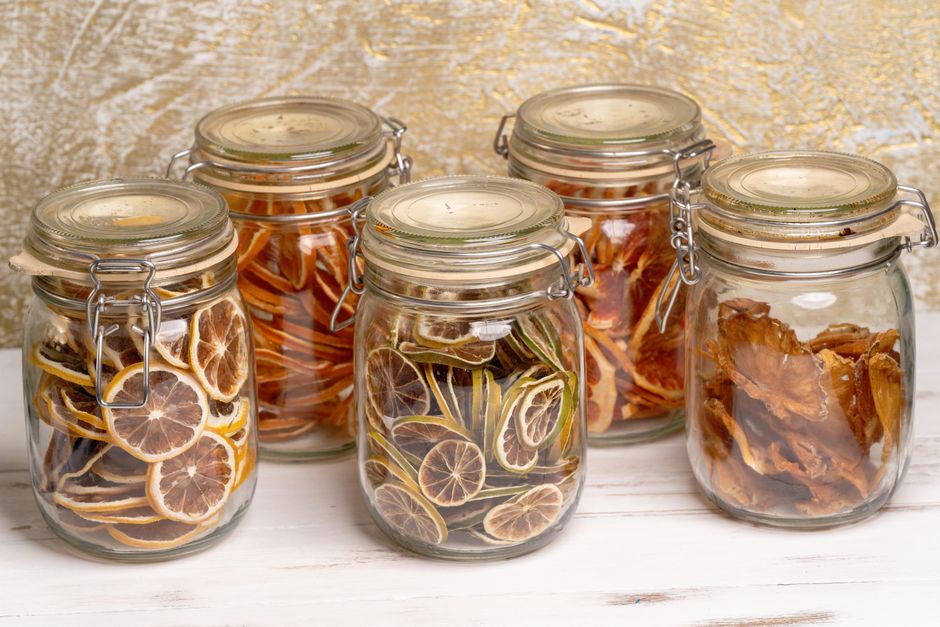
This is the question every buying guide skips — and it’s the most practical one. Walking into a kitchen store and buying 30 jars at random is how you end up with six 3-litre jars and nothing that fits your spice rack.
The Minimum Viable Pantry Jar Collection
For an average household of 2–4 people cooking regularly, here’s a realistic starting point:
Small jars (250–350 mL): 8–12
One each for your most-used spices and dried herbs. Think cumin, paprika, oregano, turmeric, cinnamon, chili flakes, garlic powder, onion powder, plus baking soda, baking powder, and yeast. You’ll fill these faster than you expect.
Medium jars (500–750 mL): 6–8
For nuts (almonds, cashews, walnuts), seeds (chia, flax, sunflower), dried fruit (raisins, dates, apricots), brown sugar, breadcrumbs, dried lentils, and split peas.
Large jars (1–1.5 L): 4–6
For all-purpose flour, white rice, pasta, quinoa, granola, and rolled oats.
Extra-large jars (2–3 L): 2–3
For bulk reserves — a 5 lb bag of all-purpose flour, a large sugar supply, or popcorn kernels.
That’s roughly 20–29 jars to fully transition a typical pantry. At $15–25 per Le Parfait jar, it adds up. Which is why pacing makes more sense than buying everything at once.
How to Phase Your Transition Without Buying Everything at Once
Start with the ingredients you restock most often and currently store in the worst conditions.
Week 1–2: Buy 6 medium mason jars (Ball wide-mouth, quart size). Transfer your flour, oats, rice, and pasta. These are the ingredients that benefit most visibly from airtight storage, and the cost is low — approximately $15–20.
Month 1–2: Add a 12-pack of small jars for spices. Weck small mold jars or simple wide-mouth half-pints work well. Retire the mismatched plastic spice containers. Cost: approximately $30–50 depending on brand.
Month 2 onward: Add larger jars for bulk storage as you work through what’s currently in bags and boxes. This way, each new jar gets filled immediately rather than sitting empty on a shelf while you figure out what goes in it.
The phased approach also lets you figure out what sizes actually work for your pantry before you commit to a full set of one style.
Frequently Asked Questions
Are glass jars truly better than plastic for pantry storage?
For most dry goods, yes. Glass doesn’t absorb odors, doesn’t stain, and doesn’t degrade with normal use the way plastic does. It also doesn’t leach chemicals into food — a real concern with plastics exposed to heat or UV light. The trade-offs are weight, breakability, and upfront cost. For a dedicated pantry cabinet, glass wins on every practical measure over a 5–10 year horizon.
How long do airtight glass jars actually keep food fresh?
It depends on the food and the seal type. In a clamp-lid jar with a good gasket, all-purpose flour keeps well for 12–18 months; whole grain flours 3–6 months (their natural oils go rancid faster); most dried spices 1–2 years; dried beans and lentils up to 2–3 years. These are storage conditions estimates, not safety guarantees — always check for off smells or visible changes before using stored food.
Can I put glass pantry jars in the dishwasher?
The glass bodies of most pantry jars are dishwasher-safe. The lids and gaskets often aren’t, or degrade faster with regular high-heat dishwasher cycles. Le Parfait and Weck both recommend hand-washing their rubber and silicone gaskets to extend gasket life. If you’re regularly dishwashing gaskets and finding your seals failing within a year, that’s almost certainly why.
What’s the best glass jar for storing flour?
A wide-mouth clamp-lid jar in the 1–1.5 L range is the most practical choice for all-purpose flour. The Le Parfait Super Jar in 1 L or 1.5 L works well, as does the Bormioli Rocco Fido in the same sizes. For whole grain flours, prioritize the most airtight seal you can get — clamp or vacuum — since the natural oils in whole grain flours make them more susceptible to going rancid.
Are bamboo-lidded glass jars actually eco-friendly?
Depends on the brand and the finish. Bamboo as a raw material is low-impact. But many bamboo lids are lacquered with petroleum-derived finishes or bonded with formaldehyde-based adhesives, which means they’re not compostable and may introduce off-gassing concerns. Ask the manufacturer what finish they use. If they can’t tell you, assume the lid is closer to a plastic lid in environmental terms than to a natural material.
Do I need special jars for fermentation vs. pantry storage?
For pantry dry goods storage, any of the jars on this list work. For fermentation (lacto-fermented vegetables, kombucha, sourdough starter), you want a jar that allows gas to escape during active fermentation — a clamp-lid jar left closed during active fermentation can build pressure. Weck jars are commonly used for fermentation because the clip mechanism allows gas to escape while keeping contaminants out; Ball mason jars with a loose lid or an airlock attachment also work. Once fermentation is complete and you’re moving to storage, a fully sealed jar is fine.